
WELCOME BONUS 200%
UP TO €1500 + 200
FREE SPINS
UP TO €1500 + 200
FREE SPINS
Home → Games
Casino games at Robocat Casino - Oficcial
Submit documents no older than three months
The requirement for identity verification involves submitting official documents that are strictly limited to a validity window of three months from the date of submission. This strict temporal constraint ensures that the personal data provided remains current and accurate for the platform's security protocols. Failure to adhere to this timeframe results in the immediate rejection of the verification request, delaying any potential payouts.
Processing delays often occur when users submit expired identification papers, forcing a repeat of the entire Know Your Customer (KYC) procedure. The system automatically flags any document with an issue date or expiration date outside the accepted range, requiring the user to provide fresh evidence of identity. This automated check prevents manual review bottlenecks but demands proactive management from the player.
Players must ensure their passport, national ID card, or utility bill is dated within the last 90 days to avoid administrative hurdles during account activation. Keeping digital copies of valid documents readily available allows for quick resubmission if the initial upload is rejected due to age restrictions. This proactive approach minimizes downtime and ensures smoother access to withdrawal functions once verification is complete.
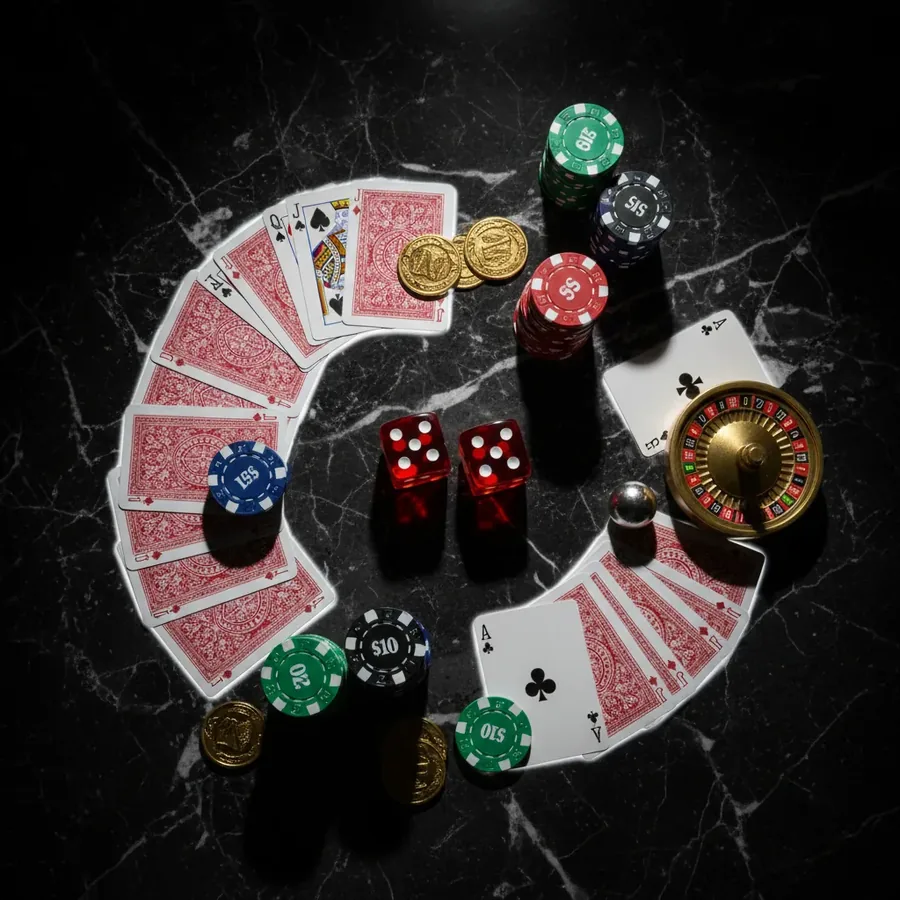
Video Poker: check payout table before betting
The Video Poker Jacks or Better 9/6 variant offers a theoretical return to player (RTP) of 99.54% when played with optimal strategy and maximum coin input. This specific payout structure rewards a Royal Flush with 800 coins for a single bet, scaling up to 4000 coins when five coins are wagered. Deviating from the required strategy significantly reduces this advantage, exposing the player to higher losses over time.
In contrast, other variants like Deuces Wild Full Pay can theoretically offer an RTP of 100.76%, providing a positive expected value for the skilled player. However, this exceptional return is contingent upon using the absolute best possible moves for every hand dealt by the random number generator. Any mistake in decision-making immediately drops the RTP below 100%, turning a profitable game into a losing proposition.
The house edge for standard Jacks or Better sits at 0.46%, whereas poorly structured tables can have much lower returns due to reduced payouts for full houses or flushes. Players must verify the paytable before placing bets, as even small changes in coin values for key hands drastically alter the long-term profitability. Checking these details protects the bankroll from unexpected mathematical disadvantages inherent in suboptimal game versions.
Why the Double Zero Almost Doubles the House Edge
The presence of a double zero on the roulette wheel increases the total number of sectors to 38, compared to 37 in European or French variations. This additional green pocket shifts the probability balance, causing the house edge to rise from approximately 2.70% to nearly 5.26% on even-money bets. The extra sector effectively doubles the casino's statistical advantage over the player's wagers.
French Roulette with La Partage mitigates this impact for even-chance bets by refunding half the stake when the ball lands on zero, maintaining a lower edge of 1.35%. However, this rule does not apply to inside bets like straights or splits, which still face the standard 2.70% edge in single-zero games. In double-zero formats, the absence of such protections means players lose more frequently on basic red/black or odd/even wagers.
Comparing the two layouts reveals that the double zero variant costs players roughly twice as much per unit wagered on average over the long run. A $10 bet on red in a double-zero game expects a loss of $0.53, while the same bet in a single-zero game expects a loss of only $0.27. This mathematical difference accumulates rapidly, making single-zero wheels the superior choice for preserving bankroll longevity.
How many sectors does the Game Show wheel have?
Without explicit data regarding wheel configurations, it is impossible to calculate precise probabilities for bonus features or multipliers associated with these live dealer games. Players should consult the individual game rules within the lobby for detailed sector breakdowns before engaging.
Standard roulette wheels, which are often confused with game show elements, typically feature either 37 sectors (European/French) or 38 sectors (American). The distinction between these counts directly impacts the house edge, with the 38-sector version offering significantly worse odds for the player. Assuming a standard configuration without verification risks misjudging the true cost of play in these hybrid entertainment formats.
Table games like Blackjack and Baccarat do not utilize spinning wheels, relying instead on card decks or random number generators for outcomes. Focusing on verified game mathematics rather than assumed wheel structures ensures accurate expectations for variance and return rates.
Connection Lost in Table Game: Round Continues Automatically
When a player experiences a network interruption during a live table game session, the software continues to process the round according to predefined safety protocols. This ensures that the outcome of the hand or spin is determined independently of the user's connectivity status, preventing unfair termination of active wagers. The system records the result and updates the balance once the connection is restored or the round concludes.
Blackjack and Baccarat rounds proceed until completion regardless of individual disconnections, meaning decisions made prior to dropout remain valid and binding. If a player disconnects before acting, the system may auto-play based on default settings or wait for reconnection depending on the specific game provider's implementation. Understanding these automatic behaviors helps manage expectations regarding active participation during unstable internet conditions.
The integrity of the game is maintained by server-side processing, which guarantees that all transactions and card deals are logged accurately despite client-side failures. Players are advised to monitor their connection stability, as prolonged outages might lead to missed opportunities for strategic plays like insurance or side bets. Restoring connectivity promptly allows users to view the final result and adjust their subsequent betting strategies accordingly.
Game categories at a glance
| Category | Examples | Stakes From | Highlight |
|---|---|---|---|
| Slots | Total Overdrive, Sweet Bonanza, Nitropolis 4 | 0,10 EUR | thousands of titles |
| Table games | Roulette, Blackjack, Baccarat | 0,50 EUR | classic rules |
| Live casino | Quantum Roulette Live, Casino Hold'em | 0,20 EUR | real dealers |
| Jackpot games | Mega Moolah, Divine Fortune, Age of the Gods | 0,20 EUR | progressive pools |
| Instant games | Aviator, Plinko, Mines | 0,10 EUR | fast rounds |
| Video poker | Jacks or Better, Deuces Wild | 0,25 EUR | strategy based |
Straight 35:1 Instead of 36:1: Where House Edge Originates
French Roulette inner bets pay Straight 35:1, which is exactly one unit less than the true odds of 36:1 for a single number on a wheel with thirty-seven sectors. This structural difference creates a permanent mathematical disadvantage for the player that persists regardless of betting patterns or short-term luck experienced during any session. That missing payout unit ensures the casino retains a consistent portion of all wagers placed on individual numbers over the long term. The edge remains fixed at 2.70% because La Partage does not apply to these specific internal positions despite the European wheel layout.
La Partage rules reduce the house advantage only when applied to even-money outside bets like Red or Black in French Roulette variants. For inner bets such as Split paying 17:1 or Corner paying 8:1, the full two-zero disadvantage applies without any refund mechanism on zero outcomes. Players often confuse the benefits of En Prison rules with those available for inside positions, but the table mathematics strictly separate these categories. Consequently, the expected loss per euro wagered on a Straight bet is significantly higher than on an outside bet where half the stake is returned.
The difference between paying 35:1 and the theoretical 36:1 represents the entire source of the house edge in this specific game configuration. A player betting ten euros on a single number loses approximately twenty-seven cents on average every time that bet is resolved over thousands of spins. This statistical reality means that no strategy can overcome the built-in disadvantage inherent in the payout structure for inner roulette wagers. The RTP of 97.30% confirms that the casino keeps roughly three percent of all money circulated through these particular betting options.
House Edge and RTP: Two Names for the Same Number
The Return to Player percentage and the House Edge are simply two sides of the same mathematical coin, describing how much money stays versus how much returns. If a slot machine has an RTP of 96%, the remaining four percent constitutes the House Edge, representing the average profit the operator expects to keep. These figures are calculated over millions of simulated hands or spins, providing a theoretical baseline rather than a guarantee for any individual playing session. Understanding this inverse relationship helps players accurately assess the potential cost of entertainment before depositing funds into their gaming accounts.
Blackjack with six decks standing on soft seventeen offers an RTP of 99.54%, meaning the house edge is precisely 0.46% for optimal strategy users. Baccarat Banker bets carry a slightly lower house edge of 1.06% due to the five percent commission on wins, resulting in an RTP of 98.94%. Comparing these two values reveals that blackjack provides a better return rate, yet both games remain highly favorable compared to many other casino offerings. The difference in RTP directly correlates to the speed at which a bankroll might deplete under identical betting conditions over extended play periods.
Video Poker Jacks or Better 9/6 delivers an impressive RTP of 99.54%, matching the best blackjack variations when played with perfect technique and maximum coins. This high return rate stems from the generous payout schedule for Full Houses and Flushes, which defines the specific 9/6 classification used by experts. Any deviation from the required strategy immediately lowers the effective return, potentially dropping the RTP below ninety-nine percent depending on the errors made. Players must commit to learning the correct hold decisions to achieve the stated mathematical advantage over the casino's built-in edge.
Straight, Split, and Corner: Three Terms Briefly Explained
A Straight bet places chips on a single number within the roulette grid, offering the highest risk but also the largest potential payout of thirty-five to one. This wager covers only one of the thirty-seven possible outcomes on the wheel, making it a volatile option suitable for players seeking large but infrequent wins. The probability of winning stands at exactly one in thirty-seven, which mathematically justifies the substantial prize multiplier offered by the casino floor for successful attempts. Beginners often favor this bet due to its simplicity, though the low hit frequency demands a larger bankroll to sustain inevitable losing streaks.
Splitting a bet involves placing chips on the line between two adjacent numbers, covering two outcomes simultaneously while paying out at seventeen to one upon success. This strategy effectively doubles the coverage area compared to a straight wager, thereby increasing the likelihood of a win while proportionally reducing the reward size. The house edge remains constant at 2.70% regardless of whether the player chooses a single number or a pair, proving that position does not alter long-term expectations. Experienced gamblers use splits to balance risk and reward more effectively than relying solely on high-variance straight bets across multiple spins.
A Corner bet occupies the intersection of four numbers, providing four chances to win while delivering a payout of eight to one if successful. This configuration offers a middle ground between the safety of dozens and the thrill of singles, appealing to players who want moderate volatility in their gameplay. The probability of hitting a corner increases to four in thirty-seven, yet the reduced payout ensures the mathematical house advantage stays firmly intact. Managing bankrolls requires understanding that these three bet types share the same underlying edge despite their different visual placements on the table layout.
Keno and Bingo with RTP Between 92 and 95
Baccarat Player Pair side bets exhibit an extremely low RTP of 89.64%, resulting in a massive house edge of 10.36% that dwarfs the main game statistics. This side wager pays eleven to one when the first two cards form a pair, but the probability of this occurring is quite low in an eight-deck shoe. The elevated edge makes this bet one of the worst value propositions available on the casino floor, requiring significant skill to avoid during regular play. Players should recognize that the high payout is merely compensation for the severe mathematical disadvantage inherent in predicting specific card combinations randomly.
Craps Free Odds bets present a unique exception in casino gaming by carrying a zero house edge and a theoretical RTP of one hundred percent on the odds portion alone. These additional wagers can only be placed after a point is established on the Pass Line, allowing players to back their initial bet with true odds payouts. While the combined game RTP drops slightly to 99.63% with 3-4-5x odds, the pure odds component remains completely fair to the participant financially. This feature allows savvy players to minimize their overall house edge significantly compared to tables offering limited or no free odds allowances.
Insurance bets in Blackjack offer a separate wager paying two to one if the dealer has a ten-value card hidden under their ace upcard. This side bet carries a high house edge of 7.47% for standard multi-deck games, making it statistically unfavorable for almost all players except card counters. The basic strategy explicitly advises against taking insurance unless the true count reaches positive three or higher in specific counting systems. Most casual players accept this expensive proposition frequently, which substantially erodes their overall expected return over hundreds of hours of blackjack action.
Video Poker 9/6: What the Two Numbers Mean
The designation 9/6 in Video Poker refers specifically to the payout multiples for a Full House paying nine coins and a Flush paying six coins per wagered unit. This particular pay table, known as Full Pay Jacks or Better, is essential for achieving the high RTP of 99.54% when playing optimally with five coins. Deviating to a lesser pay table like 8/5 reduces the return significantly, demonstrating why the specific numbers in the title directly impact long-term profitability. Players must verify this exact configuration exists before sitting down, as slight variations in the pay schedule drastically alter the game's mathematical foundation.
Maximum wagering of five coins is mandatory to unlock the top jackpot of four thousand coins for a Royal Flush, which dramatically boosts the overall return percentage. Betting fewer than five coins reduces the Royal Flush payout to eight hundred coins, lowering the RTP well below the optimal ninety-nine point five four percent threshold. This structural requirement incentivizes higher stakes play, as the marginal cost of the fifth coin yields a disproportionately large increase in expected value for the rarest hand. Smart players always maximize their bet to ensure they are capturing the full mathematical benefit designed into the game's pay table structure.
Optimal strategy for Jacks or Better involves memorizing complex decision trees that vary based on the specific combination of dealt cards and the current game state. Even minor deviations from this perfect play can cause the effective RTP to drop below one hundred percent, turning a theoretically positive expectation game into a negative one. The standard deviation of 4.42 indicates high volatility, meaning results will swing wildly around the mean in the short term despite the favorable long-term odds. Mastery of the strategy chart is therefore not optional but a strict requirement for anyone wishing to approach the advertised ninety-nine point five four percent return.
Baccarat in three steps: bet, reveal, compare
The Baccarat Banker wager on an eight-deck shoe offers a 98.94% Return to Player rate, which is mathematically superior to the Player option at 98.76%. This edge stems from the banker's positional advantage during the third-card draw rules, despite the casino charging a 5% commission on all winning bets. Consequently, the effective payout for a successful banker hand drops from the standard 1:1 ratio to 0.95:1, reducing the gross return while maintaining the lowest house edge of 1.06%. The player side bet pays 1:1 without any commission fees, but its higher house edge of 1.24% makes it a less favorable choice for long-term bankroll preservation.
Contact
Live - online chat
Banking









Providers












robocat casino 2025